Somewhere between deciding who's bringing the green bean casserole and realizing you forgot to buy a second stick of butter, Holiday Meal Planning can start to feel like its own full-time job. Multiply that across two major meals Thanksgiving and Christmas and it's easy to see why so many people end up overwhelmed before they've even preheated the oven.
The good news is that a chaotic kitchen isn't actually a requirement of the holidays. With a clear process for building your menu, organizing your grocery list, planning portions, and mapping out timing, you can host a full holiday meal without the last-minute scramble and actually enjoy the day instead of just surviving it.
This guide walks through exactly how to do that, from the first menu decision to the final dish on the table.
Why Holiday Meal Planning Makes All the Difference
- It Prevents the Last-Minute Panic: Without a plan, it's common to realize mid-week that you're missing a key ingredient or forgot to account for a guest's dietary needs. A process built in advance catches these gaps early.
- It Keeps the Budget in Check: Holiday grocery bills add up fast, especially when shopping happens in a rush. Planning ahead allows you to buy strategically and avoid overbuying out of uncertainty.
- It Reduces Decision Fatigue on the Day Of: When the menu, timing, and grocery list are already settled, the day of the meal becomes about execution, not decision-making which makes the whole day feel calmer.
- It Leaves Room to Actually Enjoy Hosting: A solid plan means less time troubleshooting in the kitchen and more time with the people you're hosting.
Step 1: Build Your Menu First
Before anything else before the grocery list, before the schedule the menu needs to be locked in.
- Start With the Must-Haves: Every family has a few dishes that are non-negotiable. List those first, since they'll anchor the rest of the menu around them.
- Balance Your Dish Categories: A well-rounded holiday menu typically includes a main, a few starches, a vegetable side, a bread or roll, at least one sauce or condiment, and dessert. Mapping out categories first helps you notice gaps before you're deep into planning.
- Account for Dietary Needs: Note any guests with allergies, intolerance, or preferences (vegetarian, gluten-free, and so on) early, so you can build accommodations into the menu rather than scrambling for a substitute dish later.
- Decide What's Homemade vs. Store-Bought: Not everything needs to be made from scratch. Deciding early which dishes you'll make and which you'll buy (rolls, a pie, cranberry sauce) can meaningfully cut down on both stress and time in the kitchen.
Step 2: Confirm Your Guest Count and Assignments
- Lock In Numbers Early: Your final headcount affects almost every decision that follows portions, grocery quantities, and table setup. Confirm with guests as early as possible.
- Decide on Potluck vs. Fully Hosted: If guests are contributing dishes, assign specific items rather than leaving it open-ended, to avoid three people showing up with mashed potatoes and no dessert in sight.
- Keep a Running List of Who's Bringing What: A simple shared list (a group text, shared note, or spreadsheet) keeps everyone accountable and prevents last-minute gaps.
Step 3: Plan Your Portions
Few things are more stressful than realizing mid-meal that there isn't enough food or ending up with an overwhelming amount of leftovers you didn't plan for.
- Use General Portion Guidelines: As a rough starting point: plan for about 1 to 1.5 pounds of turkey per person (bone-in), ¾ to 1 cup total of side dishes per person across all sides combined, and one dessert slice per person with a little extra for seconds.
- Adjust for Your Crowd: Consider your specific guest list a table full of big eaters, teenagers, or people who tend to go back for seconds may need slightly more than standard guidelines suggest, while a lighter-eating crowd may need less.
- Don't Forget LeftinationPlanning: If your family loves holiday leftovers as much as the meal itself, it's worth intentionally over-preparing a couple of key dishes rather than treating leftovers as an accident.
Step 4: Build Your Grocery List by Category
- Organize by Store Section, Not by Recipe: Rather than listing ingredients recipe by recipe, group your grocery list by category (produce, dairy, pantry, meat) to make the actual shopping trip faster and reduce backtracking through the store.
- Separate Perishables From Non-Perishables: Mark which items can be bought early (canned goods, baking staples) and which need to wait until closer to the meal (fresh produce, dairy, the turkey itself).
- Cross-Check Against Your Pantry: Before finalizing the list, check what you already have on hand to avoid buying duplicates of spices, canned goods, or baking staples.
- Build in a Buffer for the Unexpected: A small cushion in your grocery budget and list accounts for a forgotten ingredient or a last-minute dish addition.
Step 5: Map Out Your Cooking Timeline
- Work Backward From Mealtime: Start with your target serving time and work backward, noting when each dish needs to go in the oven, come off the stove, or be assembled.
- Identify What Can Be Made Ahead: Casseroles, doughs, cranberry sauce, and many desserts can be made a day or two in advance and reheated, freeing up oven space and time on the day of the meal.
- Account for Oven and Stovetop Space: With multiple dishes needing heat at different times, map out which dishes need the oven when, and note where a slow cooker or warming drawer could help free things up.
- Build In Buffer Time: Dishes rarely cook exactly on schedule. Adding 15 to 30 minutes of buffer to your timeline helps absorb the inevitable delays without derailing the whole meal.
Step 6: Prep What You Can in Advance
- Do Prep Work the Day Before: Chopping vegetables, measuring dry ingredients, and setting out serving dishes the day before frees up significant time on the day of the meal.
- Set the Table Early: Setting the table the night before (or even a couple of days ahead) is one less task competing for your attention while the kitchen is in full swing.
- Prepare a Few Dishes Completely Ahead of Time: Dishes that reheat well, like mashed potatoes, stuffing, or a casserole can often be fully made a day in advance, then reheated shortly before serving.
Step 7: Prepare for the Unexpected
- Keep a Backup Plan for Key Dishes: If a dish doesn't turn out as planned, having a simple backup (a store-bought pie, an extra bag of rolls) can save the day without extra stress.
- Have Extra Basics on Hand: Butter, eggs, and broth tend to run out faster than expected during holiday cooking. Keeping a little extra of these staples on hand prevents a last-minute grocery run.
- Accept That Something Will Go Slightly Off Plan: Even with the best Holiday Meal Planning, something small usually shifts a dish runs long, a guest arrives early. Building in mental flexibility is just as important as the physical plan.
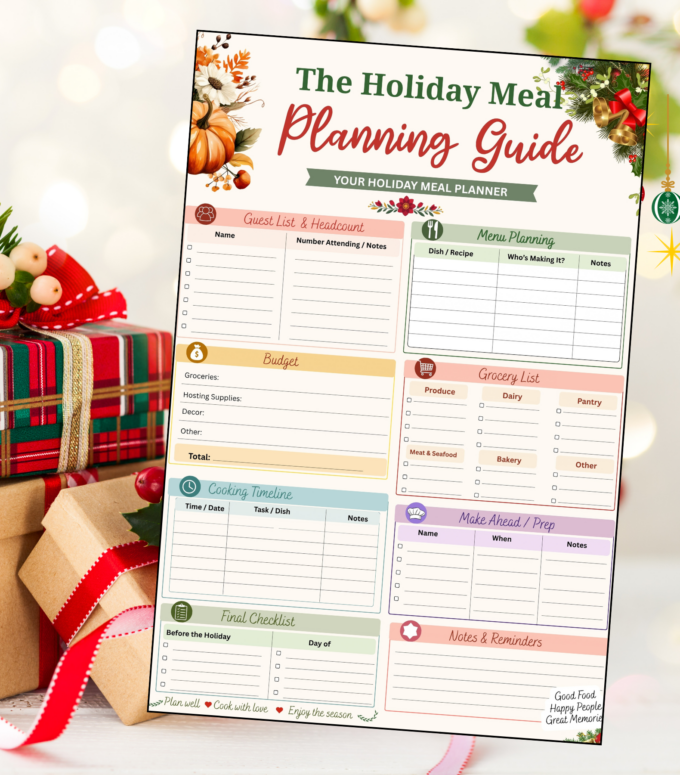
Holiday Meal Planning doesn't have to mean losing an entire week to stress and spreadsheets. With a clear menu, a realistic grocery list, sensible portion planning, and a cooking timeline that works backward from mealtime, Thanksgiving and Christmas dinners become genuinely manageable, even enjoyable to plan.
Start with the menu, build outward from there, and give yourself permission to lean on make-ahead dishes and a little buffer time. The goal isn't a perfect meal, it's a meal you actually got to enjoy making.