
The holidays have a way of sneaking up on us, one day you're enjoying the last of summer, and the next you're scrambling to find storage for decorations, counter space for cooking, and a guest room that's somehow become a catch-all closet.
Clearing out unwanted items doesn't just make your home look tidier. It creates breathing room, for holiday guests, for gifts that will need a place to live, for decorations you haven't seen since last January, and for the general chaos that the season inevitably brings.
And as a bonus, donating what you no longer need means someone else gets to enjoy it, right when charitable donations are needed most. This guide walks you through a room-by-room plan to declutter efficiently, decide what to donate, and get your home holiday-ready without the last-minute panic.
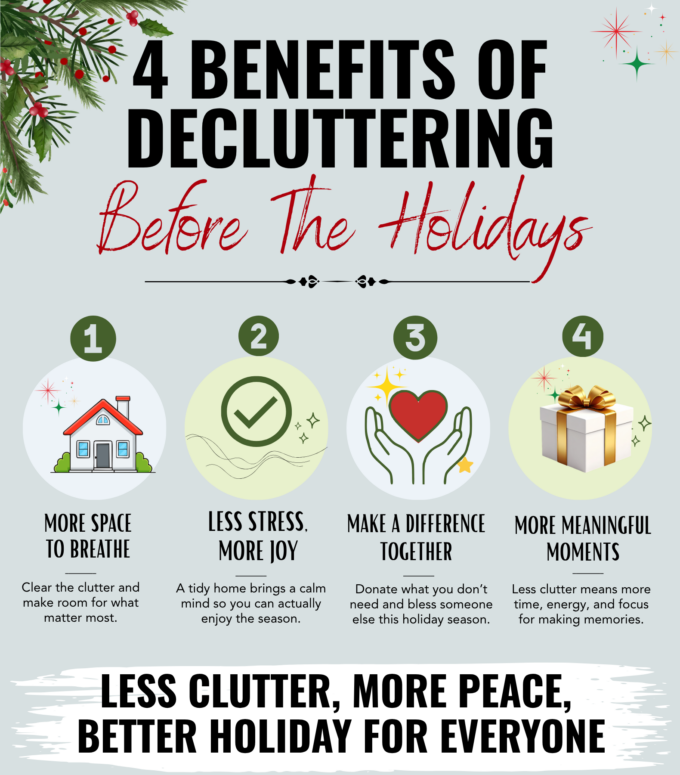
Why Declutter Before the Holidays?
It's tempting to push Decluttering & Donating to "someday" list, but doing it before the holidays specifically has real payoff.
More Physical Space for Guests and Decor: Holiday decorations, extra dishes, folding chairs, and overnight guests all need somewhere to go. A decluttered home has the closet space, shelf space, and floor space to accommodate all of it without everything feeling like it's bursting at the seams.
Less Stress During an Already Busy Season: Between shopping, cooking, hosting, and traveling, the last thing you want is to also be searching for lost items or tripping over piles of stuff. A clear, organized home reduces decision fatigue and makes daily life easier when your schedule is already packed.
A Head Start on Gift-Giving Season: New gifts are coming in. Old, unused items need to go out. Decluttering & Donating now prevents your home from becoming twice as full once the holidays are over and everyone has new sweaters, gadgets, and toys to find a place for.
Meaningful Giving Back: Charities, shelters, and donation centers often see increased need during the holiday season. Clothing, coats, blankets, toys, and household goods you no longer use can make a real difference for someone else's season.
Steps to Decluttering & Donating Before the Holidays:
Step 1: Set a Realistic Timeline
Before diving in, map out when you’ll tackle each space. Trying to declutter your entire home in one weekend often leads to burnout and half-finished piles.
Break It Into Weekly Zones, Assign one area of the home per week leading up to the holidays. For example:
Week 1: Closets and entryways
2nd Week: Living and dining areas
3rd Week: Kitchen and pantry
4th Week: Guest room, storage areas, and garage
Account for Donation Drop-Off Schedules: Many donation centers have specific hours, and seasonal cutoffs for accepting items before the holidays get busy. Check drop-off times early so you're not stuck storing bags of donations in your car for weeks.
Step 2: Declutter Room by Room
Entryways and Closets: This is the first space guests see, so it's worth prioritizing.
What to Look For
- Coats, shoes, and bags you haven't worn in over a year
- Umbrellas, gloves, or scarves with mismatched pairs
- Old mail, keys, or miscellaneous items cluttering catch-all baskets
Quick Tip
Set up a "one in, one out" rule for coats and shoes going forward, it keeps entryway clutter from creeping back.
Living and Dining Areas: These rooms typically host the most holiday activity, so they deserve special attention.
What to Look For
- Books, magazines, or DVDs you no longer use
- Decorative items that no longer match your style
- Extra throw blankets, pillows, or furniture taking up walking space
Quick Tip
If you're planning to redecorate for the holidays, this is the perfect time to pack away everyday décor and simultaneously sort out what you actually want to keep long-term.
Kitchen and Pantry: With holiday cooking and baking on the horizon, a functional kitchen is essential.
What to Look For
- Expired pantry items and spices
- Duplicate utensils, mismatched containers, or unused small appliances
- Mugs, glasses, or dishware you never reach for
Quick Tip
Clearing pantry shelves now makes room for holiday grocery hauls and prevents the "I have three of these but can't find a working can opener" problem.
Bedrooms and Closets: Guest rooms often double as storage rooms the rest of the year, time to reclaim that space.
What to Look For
- Clothes that no longer fit or haven't been worn in the last year
- Linens, towels, or bedding sets you don't use
- Miscellaneous "maybe someday" items stored under the bed
Quick Tip
If you're hosting overnight guests, aim to have the guest room decluttered and dedicated purely to guest use at least two weeks before their arrival.
Kids' Rooms and Toy Areas: With new toys and gifts on the way, this is a critical space to address early.
What to Look For
- Toys that are broken, outgrown, or no longer played with
- Duplicate items collected over time
- Clothes kids have outgrown
Quick Tip
Involving kids in the process by letting them choose toys to donate to other children, it teaches generosity and makes the process feel positive rather than like a punishment.
Garage, Basement, and Storage Areas: Often overlooked, these spaces tend to accumulate items "just in case."
What to Look For
- Broken or unused tools and equipment
- Old holiday decorations that no longer work or aren't used
- Boxes that have sat untouched for over a year
Quick Tip
If you haven't opened a box in over a year and can't remember what's inside, it's a strong sign you don't need it.
Step 3: Sort Items Into Clear Categories
As you go through each room, sort items into four simple piles to keep decisions quick and clear.
- Keep: Items you use regularly or that hold genuine value or meaning.
- Donate: Items in good condition that you no longer need but someone else can use.
- Recycle or Dispose: Items that are broken, expired, or unusable and can't be donated.
- Undecided: A small, time-limited box for items you're unsure about revisit this box in two weeks and make a final call.
Step 4: Decluttering & Donating, Know What's Donation-Worthy
Not everything belongs in a donation pile. Keeping these guidelines in mind saves time for both you and the organizations receving your items.
- Generally Accepted
- Clean, gently used clothing and shoes
- Working small appliances and electronics
- Books, toys, and games in good condition
- Unopened, unexpired non-perishable food items (for food banks)
- Coats and blankets, especially useful in winter donation drives
- Typically Not Accepted
- Stained, torn, or heavily worn clothing
- Broken electronics or appliances
- Recalled or expired items
- Personal care items that have been opened or used
Call Ahead When Possible: Donation needs vary by organization and season. A quick call or website check can confirm what a specific charity or shelter is currently accepting, especially for larger items like furniture.
Step 5: Find the Right Place to Donate
Local Charities and Thrift Stores: Organizations like Goodwill, Salvation Army, or local thrift shops accept a wide range of household goods and clothing.
Shelters and Community Organizations: Homeless shelters, women's shelters, and community centers often have specific seasonal needs, especially for coats, blankets, and hygiene items during colder months.
Food Banks: Non-perishable pantry items you won't use can go a long way for local food banks, particularly heading into the holiday season when demand rises.
Toy Drives: Many communities host toy drives in the weeks leading up to the holidays, making it an ideal time to pass along gently used, working toys and games.
Online Donation and Buy-Nothing Groups: Local buy-nothing groups or community donation pages are a great option for larger items like furniture that may not be accepted by every organization.
Step 6: Make Room for the Holidays
Once the Decluttering & Donating is done, take a moment to reset your space with the season ahead in mind.
- Create a Decoration Zone: Designate a specific storage area for holiday décor so it's easy to bring out and pack away without disrupting the rest of your organized home.
- Set Up a Gift Wrapping Station: A small, dedicated space with wrapping paper, tape, and scissors saves time and keeps gift-wrapping supplies from scattering across the house.
- Prepare Guest-Ready Spaces: With clutter cleared, set up guest rooms or sleeping areas with fresh linens and easy access to essentials, so hosting feels effortless rather than last-minute.
- Keep a "Holiday Overflow" Box: For the items you'll accumulate over the season, new gifts, cards, seasonal clothes, keep one flexible storage box on hand so new items have an immediate home instead of piling up.
Decluttering & Donating before the holidays isn't just about tidying up, it's about creating space, both physically and mentally, for the season to unfold with a little more ease. A clear home means more room for guests, less stress while juggling holiday tasks, and the added reward of knowing your donations are helping others during a season when it matters most.
Start small, work room by room, and give yourself permission to let go of what no longer serves you. By the time the holiday arrives, you'll have a home that's ready to welcome them in.


I really like the idea of making room for what actually matters instead of just organizing more stuff. Decluttering can be a good reset, but the bigger change comes from being more careful about what we bring back into the home afterward. That part makes it much easier to keep things simple.