The holidays bring a lot of joy and, for most households, a lot of spending. Between gifts, travel, decorations, and holiday meals, costs can quietly stack up until the credit card statement arrives in January and the "holiday hangover" sets in. The good news is that a festive, memorable season doesn’t require an unlimited budget.
This guide breaks down practical, realistic ways to build a frugal holiday budget from setting spending limits early to trimming costs on gifts, meals, decorations, and travel so you can enjoy the season without the financial stress that often follows it.
Why a Holiday Budget Matters
Overspending Sneaks Up Fast: A gift here, a hosting expense there, individually these purchases feel small. Added together, they often total far more than expected. A clear budget keeps the full picture visible from the start.
It Reduces Post-Holiday Financial Stress: Credit card debt from the holidays can linger well into the new year. Planning a realistic budget upfront helps you enjoy December without dreading January.
It Encourages Intentional Spending: A budget isn't about cutting joy out of the holidays, it's about spending money on what actually matters to you and your family, rather than spending reactively.
Steps On How to Spend Less This Holiday Season: A Frugal Holiday Budget
Step 1: Set a Total Holiday Budget Early
- Look at Last Year's Spending: If you have receipts, bank statements, or a rough memory of last year's holiday costs, use that as your starting point. It's much easier to plan when you know your typical spending pattern.
- Decide on a Realistic Total Number: Set one overall number for the entire season covering gifts, food, travel, and decorations rather than budgeting for each category separately from the start. This gives you a clear ceiling to work within.
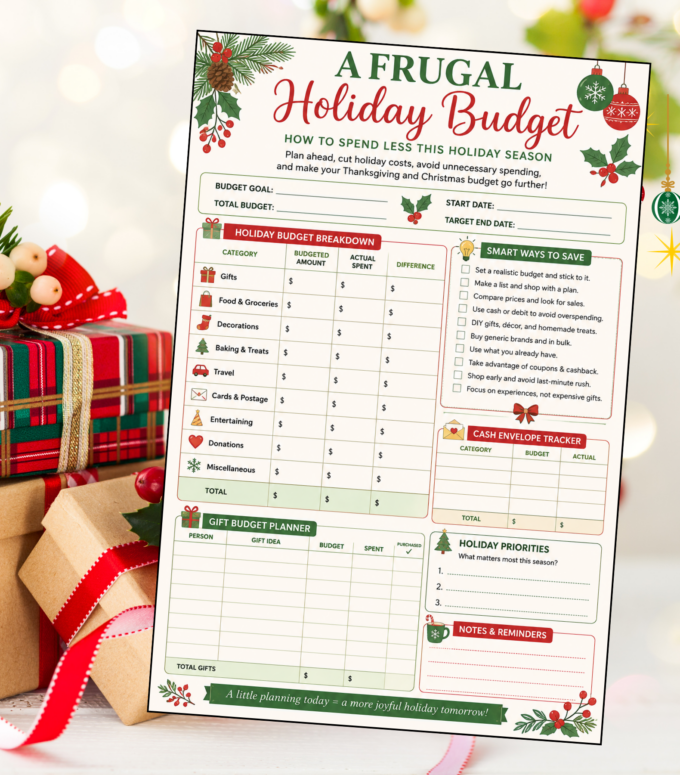
- Break the Total Into Categories: Once you have your overall number, divide it across key categories:
- Gifts
- Food and holiday meals
- Decorations
- Travel
- Miscellaneous (cards, wrapping paper, hosting supplies)
Step 2: Cut Costs on Gifts
Gifts are often the largest holiday expense, which also means they offer the most room for savings.
- Set a Per-Person Spending Limit: Decide on a set dollar amount per person before you start shopping. Having a number in mind prevents impulse upgrades at the register.
- Consider a Gift Exchange for Larger Groups: For extended family or friend groups, a Secret Santa or white elephant exchange means everyone gives and receives one meaningful gift instead of buying for an entire group.
- Shop Sales Strategically: Take advantage of major sales periods, but shop with a list in hand. Sales are only savings if you're buying something you actually planned to buy.
- Consider Thoughtful, Low-Cost Alternatives: Homemade gifts, baked goods, or shared experiences (like a coffee date or a home-cooked meal) can feel just as meaningful as store-bought items, often at a fraction of the cost.
- Track Purchases as You Go: Keep a running list of what you've spent and on whom. It's easy to lose track of individual purchases once shopping spans several weeks.
Step 3: Save on Holiday Meals
Plan the Menu Before You Shop: A planned menu avoids the extra cost of impulse grocery purchases and reduces food waste from overbuying.
- Ask Guests to Contribute a Dish: If you're hosting, a potluck-style approach spreads out the cost and effort, and most guests are happy to bring something.
- Buy Non-Perishables Early: Items like canned goods, baking staples, and spices can be purchased gradually in the weeks leading up to the holiday, spreading the cost out instead of one large grocery bill.
- Watch Portion Sizes When Shopping: It's common to overbuy for holiday meals "just in case." Planning realistic portions based on your actual guest count helps avoid overspending and excess waste.
Step 4: Decorate Without Overspending
- Shop Your Own Home First: Before buying new decorations, look at what you already have. Rearranging existing items in a new way can feel fresh without any added cost.
- Buy Decorations After the Holidays, Not Before: Post-holiday clearance sales are one of the best times to stock up on decorations for next year at a fraction of the price.
- Consider DIY Décor: Simple, natural decorations such as pinecones, greenery, homemade ornaments, can add festive charm without a big price tag.
- Set a Firm Decoration Budget: Decorations can be an easy category to overspend in since items are often inexpensive individually but add up quickly. A set limit keeps this in check.
Step 5: Reduce Travel Costs
- Book Early When Possible: Flights and accommodations typically increase in price as the holidays get closer. Booking early, when travel is required, often leads to meaningful savings.
- Be Flexible With Travel Dates: Traveling a day or two before or after peak holiday travel days can significantly reduce costs for flights, gas, or accommodations.
- Carpool or Coordinate With Family: If multiple people are traveling to the same destination, coordinating travel can cut down on gas or rental costs.
- Set a Travel Budget That Includes Extras: Remember to budget for incidentals like parking, tolls, or meals during travel, which are easy to overlook in the planning stage.
Step 6: Avoid Common Budget Pitfalls
- Impulse Purchases While Shopping: Sales and store displays are designed to encourage extra spending. Sticking to a list helps avoid unplanned purchases that add up quickly.
- "Just This Once" Splurges: A few small splurges can feel harmless individually but often accumulate into a significant overage by the end of the season.
- Not Tracking Spending in Real Time: Waiting until after the holidays to review spending often reveals the budget was exceeded weeks earlier. Checking-in weekly helps you adjust before it becomes a problem.
- Using Credit Without a Repayment Plan: If credit cards are part of your holiday spending plan, know how and when you intend to pay off the balance before making the purchase, not after.
Step 7: Track and Adjust as You Go
- Check In Weekly: A quick weekly review of spending against your budget makes it easy to catch overspending early and adjust before it snowballs.
- Leave Room for Flexibilty: Unexpected costs an extra gift, a last-minute ingredient, a forgotten card are common. Building a small buffer into your budget prevents these from feeling like failures.
- Celebrate Staying on Track: A frugal holiday season is still a full and meaningful one. Recognizing the effort of sticking to a budget can make the process feel rewarding rather than restrictive.
A frugal holiday season isn't about doing less it's about spending intentionally on what truly matters. By setting a clear Holiday Budget early, trimming costs across gifts, meals, decorations, and travel, and tracking spending along the way, you can create a holiday season that feels just as full and festive, without the financial stress that so often follows.
Start with a number, break it down by category, and give yourself permission to make thoughtful trade-offs. Come January, you'll be glad you did.